
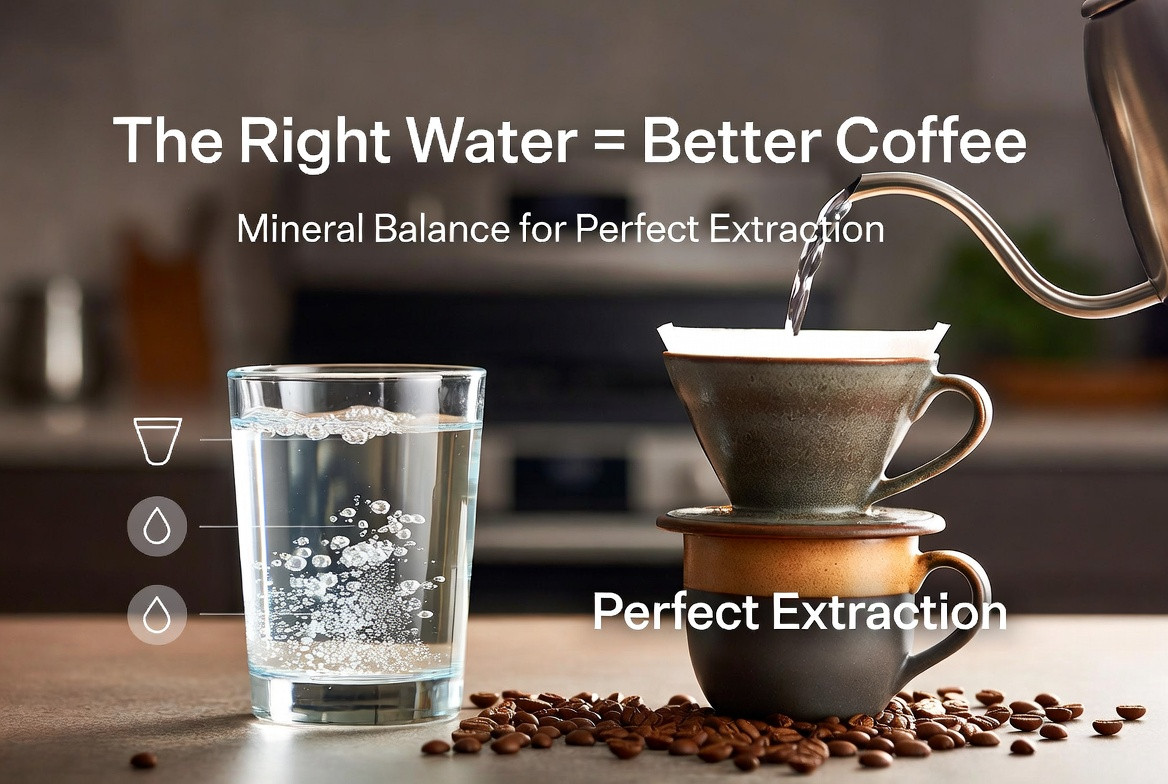
The Importance of Water Quality in Brewing Coffee: Minerals, TDS, and the Perfect Cup
The Importance of Water Quality in Brewing Coffee: Minerals, TDS, and the Perfect Cup
Water makes up over 98% of your cup of coffee, yet it’s one of the most overlooked factors in brewing. The right water can elevate your beans to their full potential — bright, balanced, and flavorful — while the wrong water can leave even the best coffee tasting flat, bitter, or muddy.
In this guide, we’ll break down why mineral content matters, what the ideal water profile looks like, and practical ways to improve your brew at home.
Why Water Quality Makes Such a Big Difference
Coffee extraction is a delicate balance of acids, sugars, oils, and bitter compounds. Water acts as the solvent that pulls these flavors out of the grounds.
- Minerals enhance flavor: Certain minerals like magnesium and calcium help extract desirable notes (sweetness, acidity, body) without overpowering them.
- pH and alkalinity affect balance: Water that’s too acidic or alkaline can mute flavors or create sour/bitter cups.
- Impurities ruin everything: Chlorine, chloramines, heavy metals, or excessive hardness introduce off-flavors and can damage your equipment.
Poor water is like cooking with dirty ingredients — no matter how skilled you are, the result suffers.
Key Water Parameters for Great Coffee
Here’s what to look for in brewing water:
- Total Dissolved Solids (TDS): Aim for 75–250 ppm (parts per million). Too low (distilled or RO water) and the coffee tastes flat and sour. Too high and it can taste overly bitter or mineral-heavy.
- Hardness (Calcium + Magnesium): Moderate levels (around 50–150 ppm) are ideal. Magnesium brightens acidity; calcium adds body and sweetness.
- Alkalinity (Bicarbonates): Keep it low-to-moderate (under 100 ppm) to avoid dulling bright flavors.
- pH: Slightly neutral to slightly acidic (6.5–7.5) works best for most coffees.
- Sodium & Other Minerals: Low sodium is preferred — high levels can taste salty or flat.
Specialty coffee organizations like the Specialty Coffee Association (SCA) have published recommended water standards that many roasters and baristas follow.
Common Water Problems & Solutions
- Tap Water: Often contains chlorine (chemical taste) or high minerals that cause scale in kettles and brewers.
- Distilled / Reverse Osmosis (RO): Too pure — lacks minerals, resulting in under-extracted, lifeless coffee.
- Bottled Spring Water: Variable quality — some are excellent, others too hard or soft.
- Softened Water: High sodium, which can mute flavors.
Best options for home brewers:
- Filtered tap water — Use a good activated carbon filter (e.g., Brita with remineralization or a dedicated coffee filter like BWT or AquaChef) to remove chlorine and adjust minerals.
- Third Wave Water or similar mineral packets — Add these to distilled/RO water for a precise, SCA-aligned profile.
- High-quality bottled water — Look for low-sodium spring waters with balanced minerals (e.g., some European mineral waters).
- Custom remineralization — Advanced users blend RO water with specific mineral concentrates.
Practical Tips for Better Water at Home
- Test your water: Affordable TDS meters and test kits are available online.
- Start simple: If you’re using tap water, run it through a quality pitcher filter and let it sit to off-gas chlorine.
- For espresso or pour-over enthusiasts: Consider a dedicated water system to protect equipment and consistency.
- Temperature matters too: Brew with water at the right temp (195–205°F / 90–96°C for most methods) alongside good mineral content.
- Experiment: Brew the same beans with different waters side-by-side to taste the difference.
Final Thoughts
Great coffee is a partnership between exceptional beans, proper grind size, brewing technique — and the right water. Investing a little time (and minimal cost) into your water can dramatically improve every cup you make.
Pair this with our fresh whole bean coffees and the right grind (see our coffee grind sizes guide) for consistently outstanding results.
What’s your current water setup? Have you noticed big flavor differences when switching waters? Share in the comments — we love hearing from fellow coffee lovers!
Ready to brew better? Shop our selection of premium whole bean coffees today and taste the difference quality makes.
Recent Posts
-
How to Choose a Coffee Roast Level
Roast level is the fastest way to narrow a coffee menu. A higher number is not a better coffee. It …Oct 3rd 2026 -
Dark Decaf Coffee: No Caffeine Here Blend
Most decaf searches start from a simple problem. You want a real cup in the afternoon or after din …Oct 3rd 2026 -
Espresso at Home with Espresso Blend 101
If you are setting up espresso at home, start with the coffee the shop already uses for it. Espres …Oct 3rd 2026